編按:本文綜合整理自 WhyNotHugo 原文,以及 Hacker News 討論串,並加入 Siami 編輯部觀點與分析。
一句話總結這篇文章
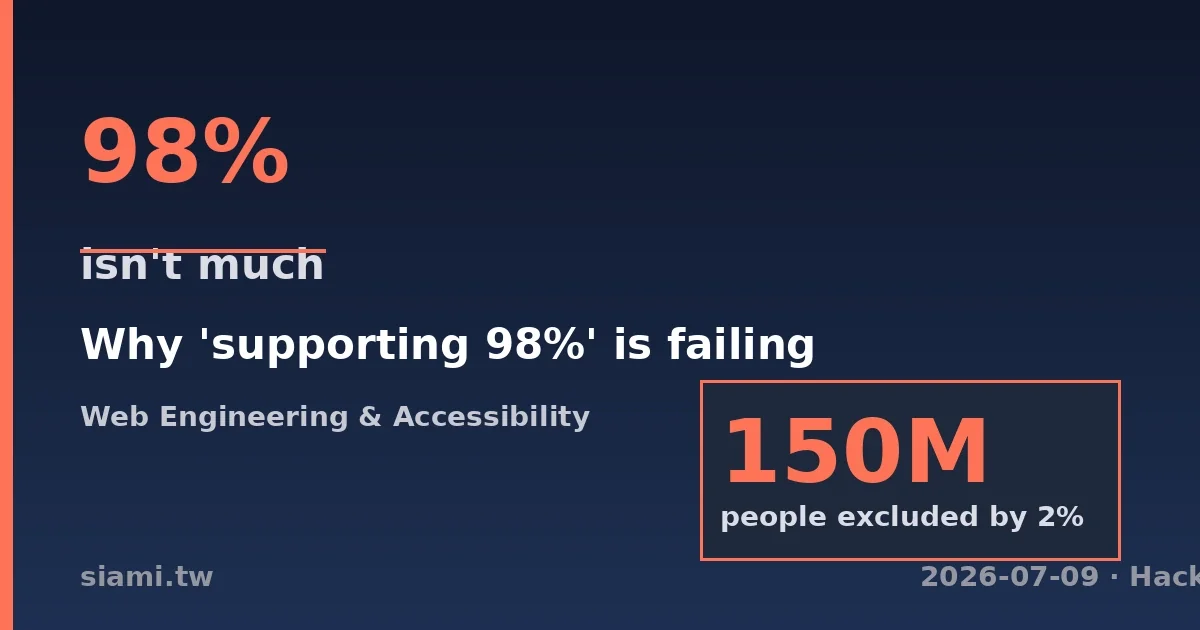
獨立開發者雨果(WhyNotHugo)最近發了一篇短文〈98% isn’t very much〉,在 Hacker News 上拿下 286 分、214 則留言。核心論點很簡單:「98% 聽起來很多,但對網頁這種基本公共服務而言,剩下那 2% 等於把 1.5 億人踢出門外。」
98% 為什麼不夠?用三個日常例子拆開看
作者雨果用了三組對比,把抽象的百分比拉到生活直覺:
- 98% 考試滿分 → 學生資質超群
- 98% 不食物中毒的餐廳 → 你一個月就會上吐下瀉一次
- 98% 準時發薪的老闆 → 員工會辭職
他把同樣的邏輯套到網頁:
If a website uses fancy new browser features and works for 98% of the population, that means that it won’t work for ~150 million people. If a website makes a change and that works for 98% of their visitors, they’re basically kicking out 2% of their audience.
換句話說,百分比越高,「邊際效用」越大。從 99% 進步到 99.9% 的成本,可能比從 90% 進步到 99% 還高——但對 1.5 億被排除的人而言,這 0.9% 才是「能不能用」的分水嶺。
為什麼這件事重要
這篇被推上 HN 首頁不是偶然——它觸及了 2026 年前端社群最敏感的兩個神經:
1. 「新 CSS 標準可以用了吧?」的迷思
Over the last year, only ~70% of the visiting browsers supported the new CSS features. Even though this feature is widely supported in a general audience, for my audience, it left out 30% of the visitors.
雨果自己接案時查了一個客戶的真實瀏覽器分佈——就算 CSS Nesting 在 caniuse 上寫 90% 支援,落到他客戶的實際流量只剩 70%。「通用支援率」和「你的使用者支援率」是兩件事。
2. 「優雅降級」(graceful degradation)不是新東西,但被新工具鏈遺忘了
CSS Nesting、:has()、Container Queries、View Transitions API 這些 2023-2026 才穩定的新功能,都假設了瀏覽器會 fallback。但實務上很多團隊用了新語法後,根本沒寫 fallback——他們相信 caniuse 的綠色勾勾就是「可以上線」的信號。
對比參考:Kilian Valkhof 2026 年的文章也提到,CSS Nesting 真正的價值在於
@media可以包進其他 selector 裡——但這只在支援的瀏覽器有效,其他瀏覽器直接無聲失效。
數據解讀:98% 的數學
把 98% 翻譯成「期望值」會更痛:
- 100 個使用者的網站 → 每次改版踢 2 個人
- 1 萬 DAU 的網站 → 每天 200 人看不到你要給的內容
- 全球網頁 50 億使用者 → 1 億人(不是 1.5 億,因為很多人用同一個瀏覽器)
HN 留言 @phailhaus 提出了更精準的換算:
Going from a success rate of 98% to 99% doesn’t sound like much, but that’s failing 1 in 50 vs 1 in 100. You’ve doubled the efficacy.
百分比的「奇點」在 100 附近:從 98% 到 99% 失敗率減半;從 99% 到 99.9% 再減半;但工程師和 PM 聽起來都像「多 1% 嘛,差不多」。
質疑:是不是過度反應?
當然也有人反駁。HN 留言 @wccrawford 拿到高票,他主張:
If your business plan requires you to capitalize on more than 98% of the market, it’s already a failure. It’ll never happen.
現實是:沒有任何產品能服務 100% 的人。連 Google 都放棄 IE、連 Apple 都放棄 Intel Mac。所以 98% 作為「商業妥協」是合理的——但這跟「網頁作為公共基礎建設」是兩種不同的評價標準。
雨果文章真正的價值,是提醒工程師:「通用支援率」和「你的使用者支援率」要分開看。他沒要大家別用新功能,他要大家至少查一次真實流量。
Siami 觀點
這篇短文能上 HN 榜首,剛好對應了 2026 年前端圈的三個矛盾:
- 「用新東西比較潮」 vs 「穩定性才是生產力」 — 新工具鏈(Vite、Vitest、Bun)不斷推陳出新,但企業客戶的瀏覽器分佈永遠落後 2-3 年。
- 「95% 市場覆蓋」迷思 — 多數 web 分析平台只給你 device category(mobile/desktop)、country、browser,不給「真正會壞掉的 feature 清單」。
- 「優雅降級」的隱性成本 — 寫 fallback 要多花 20-40% 工時,但 PM 看不到價值,因為「失敗的使用者」不會回來抱怨(他們直接關掉分頁)。
給工程團隊的具體建議:
- 上線新 web feature 前,用 CrUX 資料(web.dev)查真實分佈,不是 caniuse 的全球平均。
- 對企業客戶的內部系統(後台、SaaS),支援率標準請拉到 99.5%——因為使用者沒有替代選項。
- 對消費者產品,至少留個「不支援」提示頁,而不是靜默壞掉。
1.5 億人不是抽象數字——他們可能是你奶奶、你的客戶、你下一份工作的面試官。
編按:本文綜合整理自 WhyNotHugo 原文、Hacker News 討論串,並加入 Siami 編輯部觀點與分析。原文作者:speckx (HN 帳號)、WhyNotHugo (站名)。
網友熱門留言 (5)